I’ve always been fascinated by the creative possibilities of working with computers.
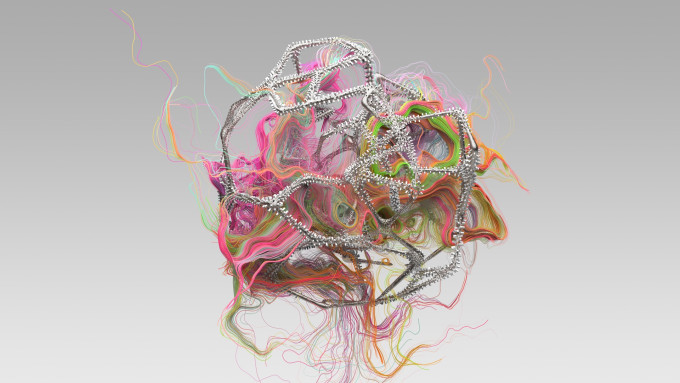
From the moment I plugged in a Sinclair ZX81 and a humble cursor blinked on screen inviting me to type something – to the generative systems I now build to “make a thing which makes a thing” – the curiosity has only increased.
Through working with these machines — these code based collaborators — I can place into the world my thoughts and ideas exploring our relationship and interactions with the analog and digital.
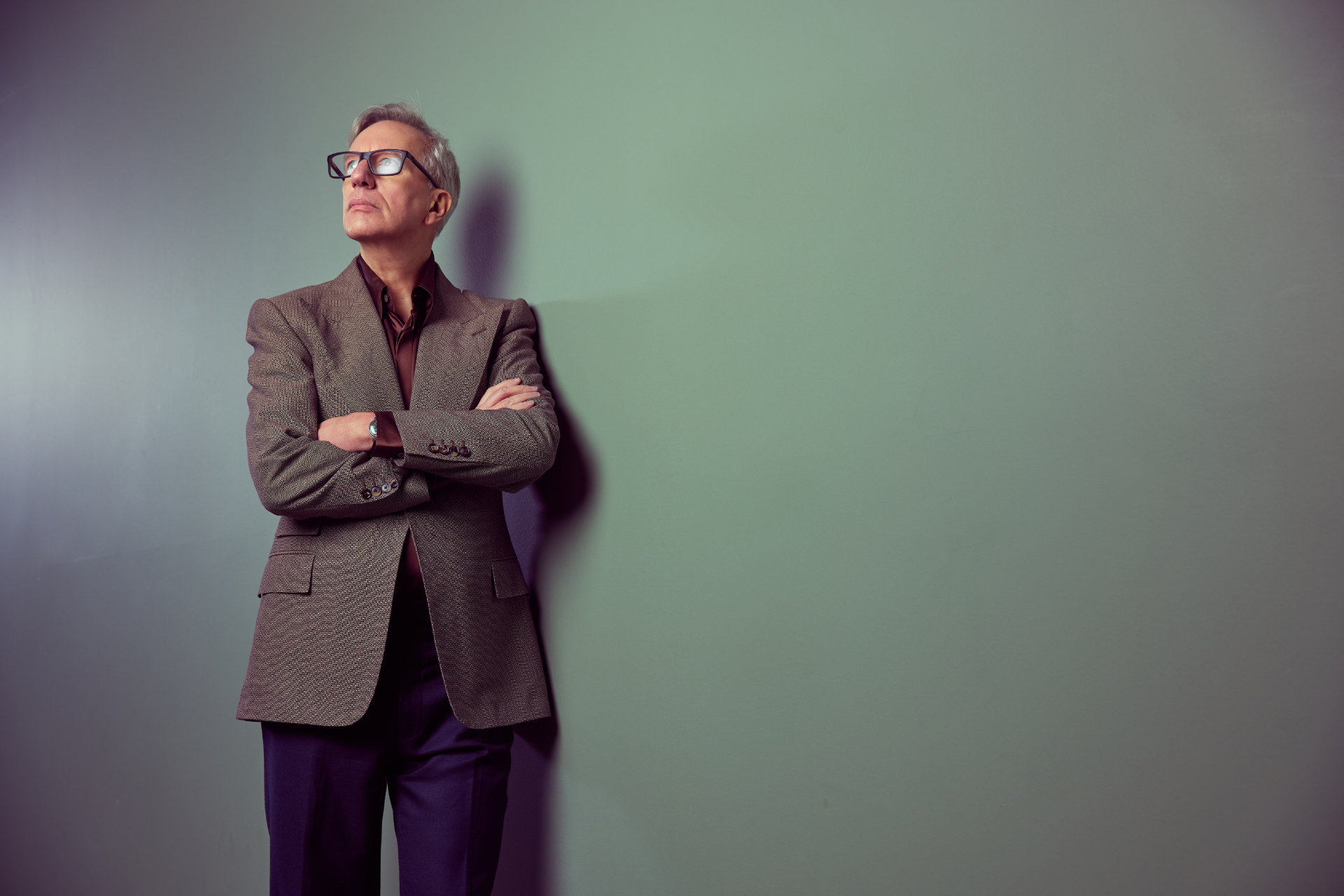
Brendan Dawes is a British artist and designer renowned for his playful yet thought-provoking explorations of data, technology, and everyday objects. Rooted in the ethos of remix culture, Dawes’s work often re-contextualises existing materials to examine how people experience the physical and digital worlds. By blending code, found objects, and tactile interfaces, he creates works that invite audiences to consider the poetry hidden in mundane moments and the hidden structures within complex data.
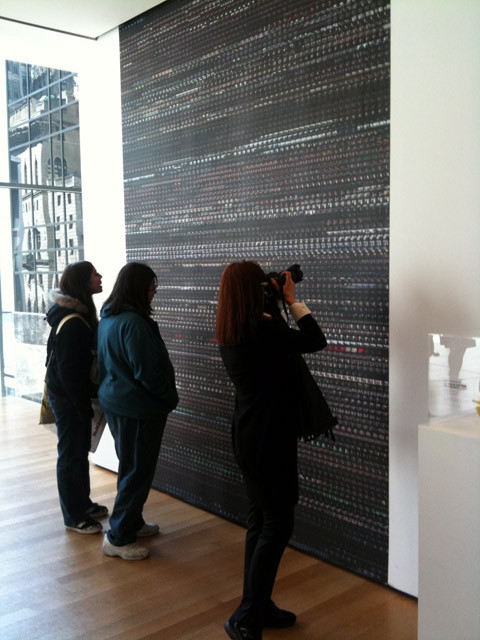
Dawes first gained wider recognition for works such as Cinema Redux, a visualization that deconstructs entire films into a series of cinematic fingerprints, revealing new patterns in familiar content. This approach – taking existing cultural artifacts and reshaping them to uncover fresh perspectives – exemplifies Dawes’s dedication to remixing culture, something he first explored when creating loops on tape for bootleg breakbeat albums on vinyl. Drawing on influences from design, architecture, and the playful spirit of the Dada movement, he frequently references the concept of the “readymade” using quotidian items as foundations for new experiments in visual form and interactivity.
Dawes’s work has been exhibited internationally and garnered acclaim from both the art and design worlds, with pieces featured at institutions such as the Museum of Modern Art in New York. By intertwining code-driven processes with physical objects and everyday ephemera, Brendan Dawes continually redefines how we interpret data, narrative, and the role of the artist-as-remixer in contemporary culture.
In 2024 he collaborated with American film maker Gary Hustwit to make the world's first generative film, about the musician, producer and artist Brian Eno. The film, titled Eno, is unique every time it is viewed, with 52 quintillion possible versions. The film premiered at the Sundance Film Festival in 2024 and was later shortlisted for the Academy Award for Best Documentary Feature.
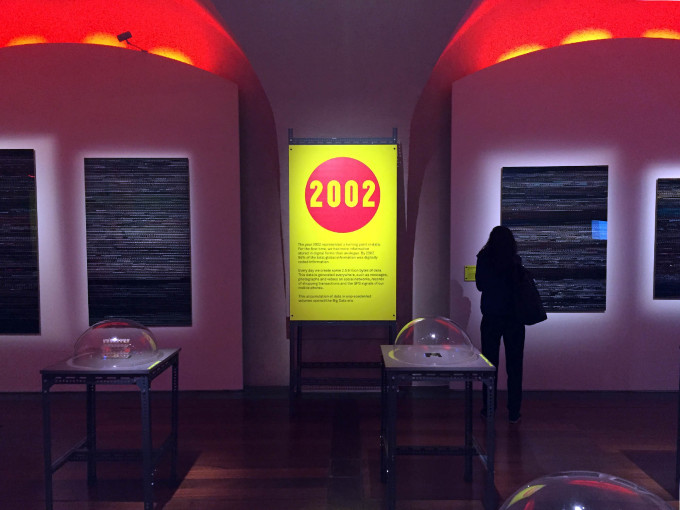
A Lumen Prize and Aesthetica Art prize Alumni, his work has been 3D printed on the International Space Station, honoured in awards including Fast Company, Information is Beautiful and D&AD and featured in many exhibitions across the world including Big Bang Data in thirteen cities, three MoMA shows in New York, Brighton Digital Festival, ArtFutura and ZKM. His Cinema Redux work became part of the MoMA permanent collection in 2008.
His work has been auctioned at Sotheby’s Natively Digital: A Curated NFT Sale, The Burnt Auction – the first NFT sale offered by an auction house in France with Fauve Paris and Generative Art and The Future an art exhibition in Shenzhen hosted by China’s largest auction house, Beijing Poly.
He is Visiting Professor of Computational Art at Manchester Metropolitan University and is represented in the UK and Europe by Gazelli Art House.
Data by itself is not enough; data needs poetry.
Selected Solo Shows
- Moments Spent with Others, Gazellio, London, UK, 2022
- Somewhere Amongst The Trees, Dog & Pony, Munich, Germany, 2015
- Dot Dot Dot, SIA, Sheffield, UK, 2014
- Cinema Redux, Richard Goodall Gallery, Manchester, UK, 2012
Selected Group Shows
- After the Dataset, Hek Basel, Online, 2026
- Subject to Change, Gazelli Art House, London, 2025
- Factory Reality: Post Realism in the 2000s, Offline, New York, USA, 2025
- Augmented Intelligence, Christie's, New York, USA, 2025
- Gen/Gen: Generative Generations, Gazelli Art House, London, 2023
- Cartography of the Soul, Christies 3.0, 2023
- Digital Impact, Disseny Hub, Barcelona, Spain, 2023
- Photofairs, Shanghai, China, 2023
- Factory : Première !, NFT Factory, Paris, France, 2022
- IN TOUCH: Art in the Age of Post-NFTism, dekabinett, Berlin, Germany, 2022
- Ghost in the Machine, SuperRare Gallery, New York, USA, 2022
- Proof of People, Fabric, London, UK, 2022
- Cartography of the Mind, Christies, New York, USA, 2022
- Yongle Auction House, Beijing, China, 2022
- The Burnt Auction, Fauve Paris, Paris, France, 2022
- Art & NFTs: The Digital Roots, LA Frieze, Los Angeles, USA, 2022
- Transformations, Unit London, London, UK, 2021
- Guangzhou Art and Culture Expo , Beijing, China, 2021
- American Express Platinum Lounge, Miami Art Basel, Miami, USA, 2021
- DCentralCon, Miami, USA, 2021
- Shenzhen NFT Art Week, Shenzhen, China, 2021
- CAFA Global NFT Art Season, Shanghai, China, 2021
- Generative Art and the Future, Poly Auction, Shenzen, China, 2021
- NFTism, Unit London, London, UK, 2021
- Natively Digital, Sotheby's, London, UK, 2021
- .ext, Gazelli Art House, London, UK, 2021
- Renaissance 2.0, Rome, Italy, 2020
- Art Futura 2020, Europe and North America, USA, 2020
- Brighton Digital Festival, Brighton, UK, 2019
- ZKM Season of Media Arts 2019, Germany, 2019
- Big Bang Data, Artscience Museum, Singapore, 2016
- Big Bang Data, Espacio Fundación Telefónica, Santiago, Chile, 2016
- Impression 3D, Le Lieu Du Design, Paris, France, 2016
- Big Bang Data, Somerset House, London, UK, 2015
- _remanufactum, Szczecin, 2015
- Designing with Data, Hyundai Card Design Library + MoMA, Seoul, South Korea, 2015
- Big Bang Data, Buenos Aires, Argentina, 2015
- Big Bang Data, CCCB, Madrid, Spain, 2015
- Designer Data, National Centre for Craft and Design, Lincolnshire, UK, 2014
- Big Bang Data, CCCB, Barcelona, Spain, 2014
- Fieldguide, London Design Festival, London, UK, 2012
- Talk to Me, MoMA, New York, USA, 2010
- Action! Design Over Time, MoMA, New York, USA, 2010
- Design and the Elastic Mind, MoMA, New York, USA, 2008
Awards
- Aesthetica Art Prize, Finalist, 2025
- Cinema Eye, Outstanding Achievement in Visual Design, 2025
- Breakthrough in Storytelling, Breakthrough Prize, 2025
- Lumen Prize, Shortlist, 2021
- Aesthetica Art Prize, Longlist, 2021
- Art Futura, 2019
- Fast Company, Innovation by Design Awards, 2015
- Information is Beautiful, Individual, 2014
- D&AD, Wooden Pencil, 2009
Publications
- Collecting Art Onchain, Kate Vass Galerie, 2025
- On NFTs, Taschen, 2024
- Digital Design: a History, Princeton University Press, 2023
- CryptoArt Begins, Rizzoli illustrati, 2022
- The Age of Data, Braun Publishing, 2021
- HAS Magazine 01, Unesco, 2020
- The Book of Circles, Princeton Architectural Press, 2017
- Thoughts on Information Design, Lars Muller Publishing, 2014
- Infographics - Designing and Visualising Data, Promopress, 2014
- Play Matters, MIT Press, 2014
- Digital Prohibition: Piracy and Authorship in New Media Art, Bloomsbury, 2012
- Talk to Me, MoMA, 2010
- Design and the Elastic Mind, MoMA, 2008
- Graphic Design: The New Basics, Princeton Architectural Press, 2008
- Small Tech: The Culture of Digital Tools (Electronic Mediations), University Of Minnesota Press, 2008
- Analog In, Digital Out, New Riders, 2006
- The Digital Canvas, Abrams Studio, 2006
- Personal Web Sites, Rockport, 2002
- Drag Slide Fade, New Riders, 2001
- In Your Face Too - the best of interactive interface design, Rockport, 2000
- New Masters of Flash, Friends of Ed, 2000
- Flash deConstruction: The Process, Design, and ActionScript of Juxt Interactive, New Riders, 2000
Coverage
- TouchDesigner Showcase TouchDesigner
- Notes Towards Situating “AI”: Seven Critiques & Seven Problems Brooklyn Rail
- How the Brian Eno music documentary shifts with every viewing LA Times
- Can machines be more "truthful" than humans? The Financial Times
- The Amazing, Shape-Shifting Brian Eno Doc, and the Meaning of Generative Art ArtNet
- Generative Film’s Potential: Eno Charlotte Kent for Brooklyn Rail
- Eno is a documentary designed to be different every time it screens SF Chronicle
- Eno - creativity 52 Quintillion ways New York Times
- Featured in Le Random Art's History of Generative Art timeline: 2000, 2004 and 2019
- Sundance 2024: Generative AI Changes Brian Eno Documentary With Every View Forbes
- The Future of Filmmaking Panel Charts the French New Wave to A.I. IndieWire
- Uncovering new histories of human-machine interaction Right Click Save
- Gazelli exhibition takes us into the new dimension of digital art Wallpaper
- Brendan Dawes on AI and Creativity Chance Operations
- Artist-Centered Cybersecurity Outland
- 2022 in Review: Artists on NFTs Outland
- In Conversation with Rachel Falconer Gazelli Art House
- Brendan Dawes and the Art of Lost Time Right Click Save
- Brendan Dawes, NFT Collector WhaleShark’s Favourite Digital Artist Tatler
- Brendan Dawes Sparks Thought and Imagination Through A Data-Driven Practice Artplugged
- Generative Art: The Artists Defining the Space Ledger
- Brendan Dawes on NFTs and Staying Curious Danielle Newnham Podcast
- Interview on Kait Borsay show Times Radio
- Buyers splash out on art that doesn’t exist The Times
- How cryptoart is turning creators into millionaires ITV News
- The Bitcoin Elite are Spending Millions on Collectable Memes Wired
- 3 Examples of Data Viz at the Boundary of Tech and Reality Infogr8
- Brendan Dawes's Seven Rules of Creativity Magenta
- Artist Fireside chat with Brendan Dawes Whale
- The Science of Fine Art with Brendan Dawes Makersplace
- Beyond Work Danielle Newnham
- Interview on the This is HCD podcast
- Beyond The Chart Data Stories
- Data Stream Day BBC Radio 4
- Stories hidden in Data Creative Bloq
- Audio interview for Lecture in Progress
- An iOS App That Freezes Moments - A Chat With Kennedy's Brendan Dawes Forbes
- Artist Brendan Dawes selects his top 5 sources of inspiration Somerset House
- Brendan Dawes Sharing Your Work Make
- The Age of Hard and Soft Interview With Designer Brendan Dawes On Six Monkeys Image Source
- Visualizing Data With 3D Printing A Chat With Brendan Dawes Forbes